Many rivers have few gauges, and long stretches of them have none. This study joins an untuned model of a river basin with a neural network that learns at the gauged points and carries what it learns along the river. In three basins in India, Australia and the United States it predicted the flow more closely than the model did, also at stations it had never seen.
At a glance
- Theme: Streamflow in basins with few gauges
- Where: Upper Narmada (India), Mitchell (Australia) and Upper Chattahoochee (United States)
- Data: Weather, terrain, soil and land cover from data sets that cover the globe; daily flow at the gauges
- Approach: A basin model used untuned, with a network that follows the river and remembers the days before
- Lead author: Dr. Venkatesh Budamala
- Status: Published, code open

The basics
How much water a river carries decides how a reservoir is run, how a flood is met and how a drought is planned for. It is measured at gauges, and gauges are costly to build and to keep. The usual way to estimate the flow elsewhere is a model of the basin, built on the physics of rain, soil and channels. Such a model has to be tuned against a gauge. Where there is none, there is nothing to tune it against.
The idea
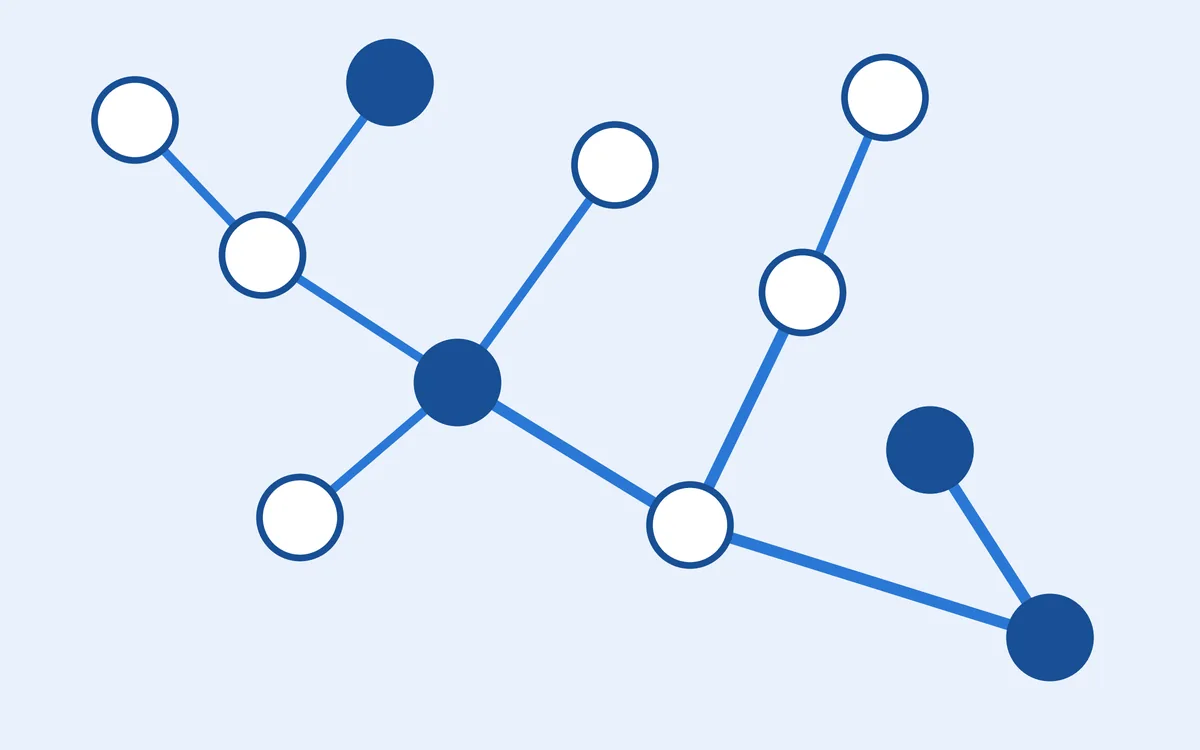
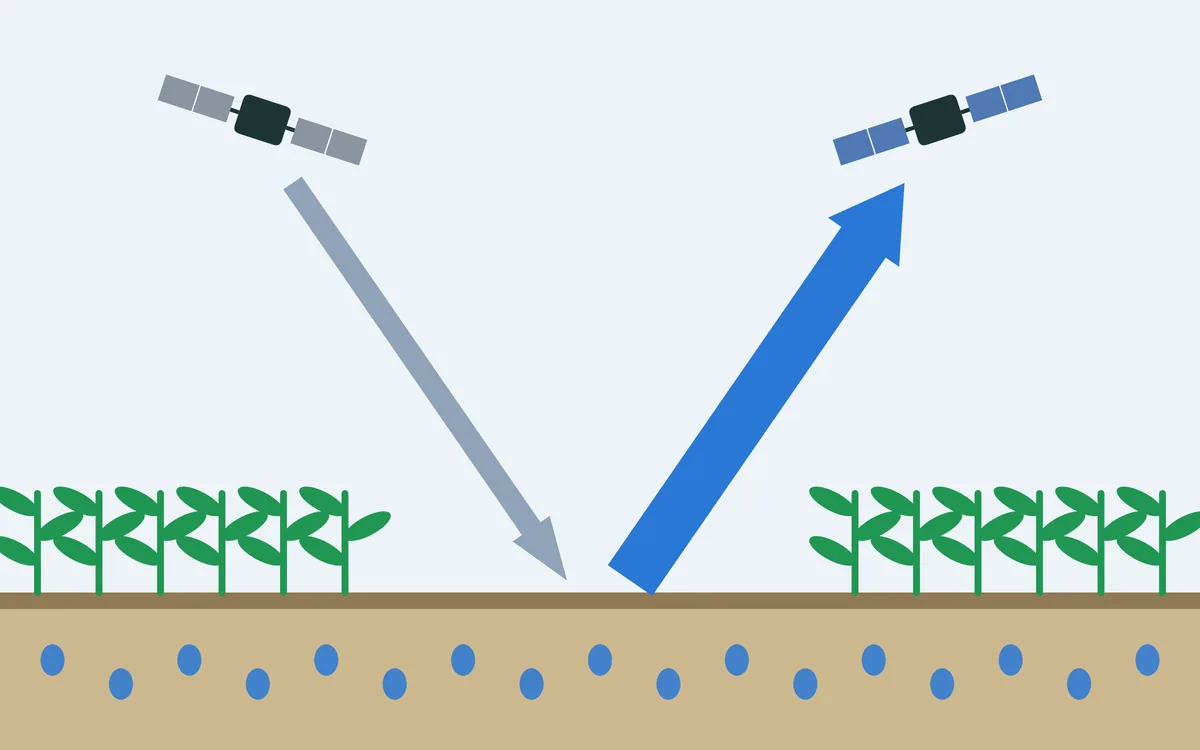
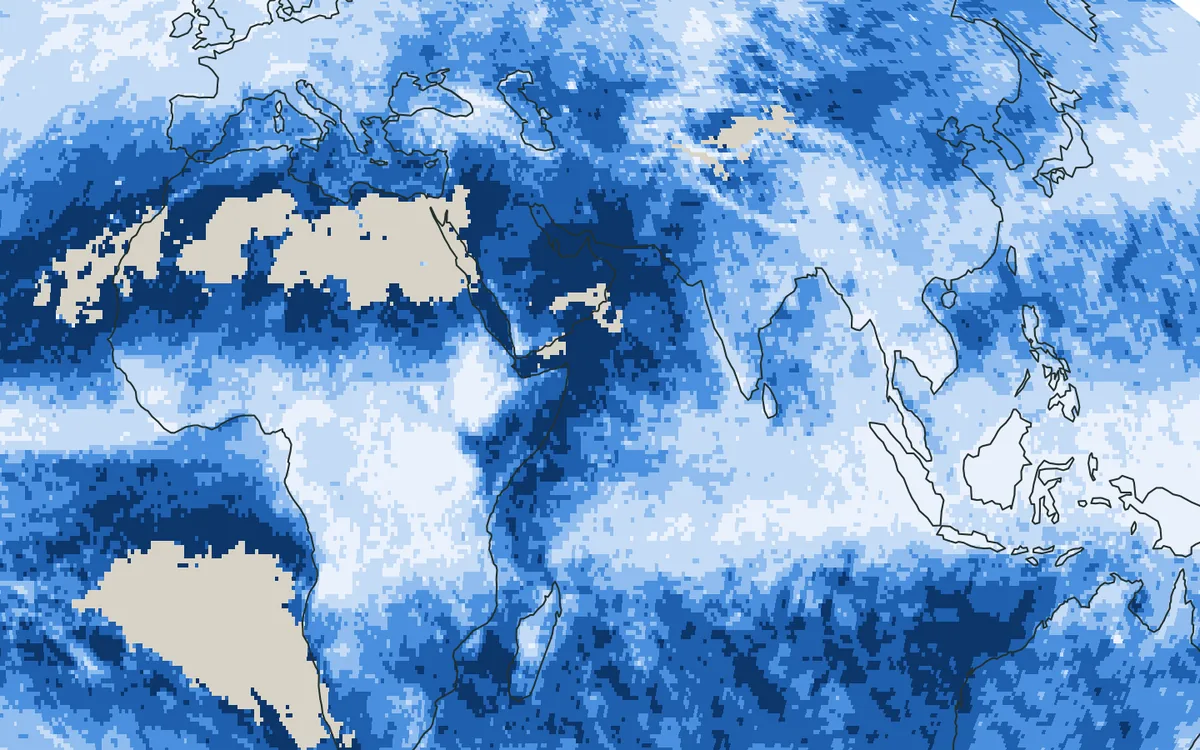
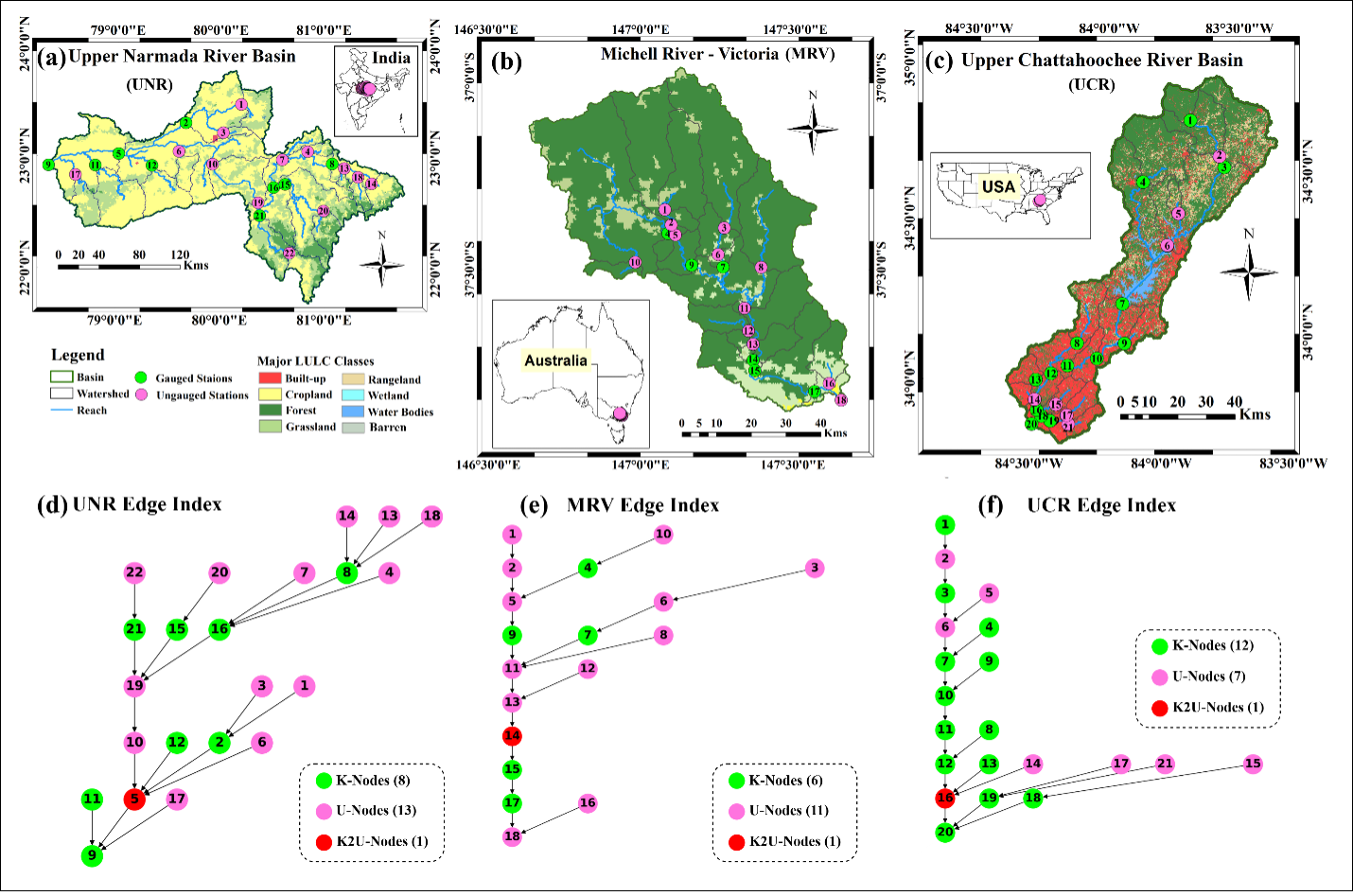
The study runs the model without tuning, for every part of the basin, gauged or not. Its results for each part, such as the water in the soil, the flow from groundwater and the runoff, become the inputs of a neural network. The network is laid out like the river itself: every part of the basin is a point, joined to the next one downstream. It learns at the points that have a gauge. Because the points are joined, what it learns there reaches the points that have none. A second part of the network looks back over the days before.
Three basins

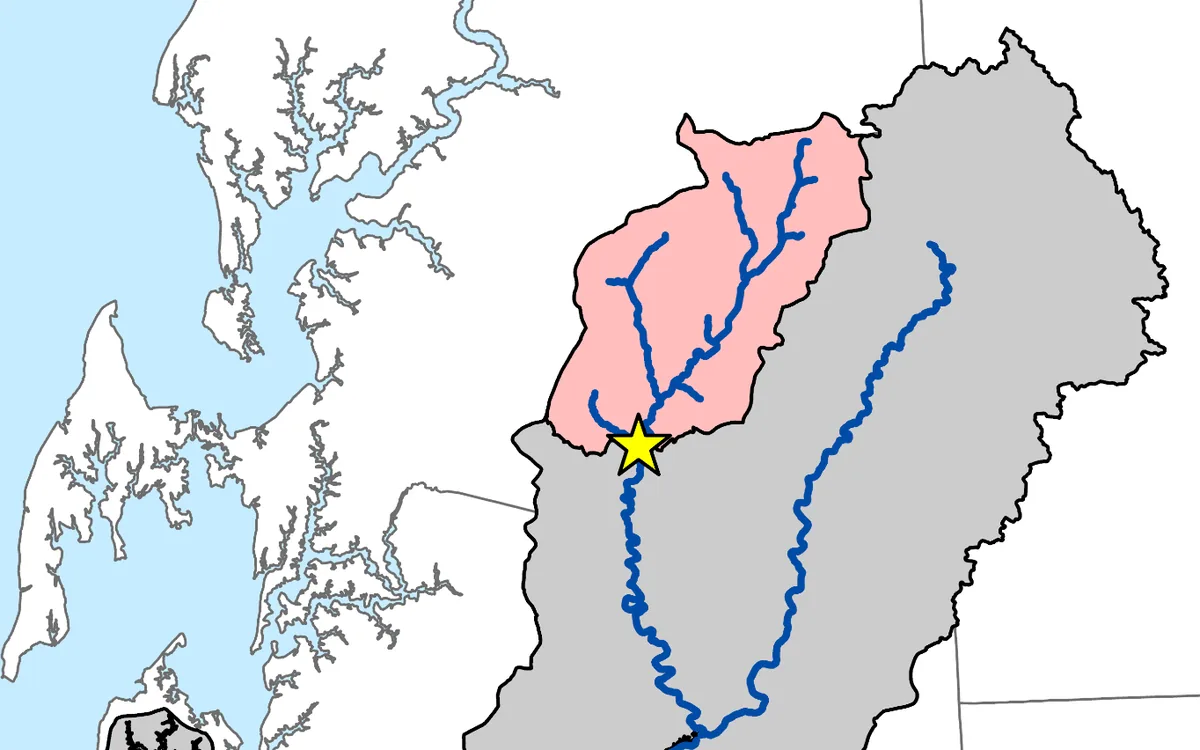
The three basins differ on purpose. The Upper Narmada in central India lives on the monsoon, which brings over 90 per cent of its rain between June and September. The Mitchell in Victoria runs unregulated from the wet Victorian Alps to drier plains. The Upper Chattahoochee in Georgia is humid and well gauged, and the city of Atlanta has grown across its lower reaches.
What was found

The untuned model alone does poorly and often predicts more than half as much water again as was measured. Tuning helps, where there is a gauge to tune against. With the network the paper reports a median efficiency of 0.50 to 0.75 across the basins, against values between −0.5 and 0.4 for the model alone, tuned or not, and a bias within 10 per cent. The measure is the Kling-Gupta efficiency, in which 1 is a perfect match.
At stations it had never seen
The real test is a place without a gauge. One gauged station at a time was held back, the network was trained on the others, and its prediction was compared with what the held-back gauge had recorded. The skill there stayed close to the skill at the nearest gauged station, within 0.2 either way, whether the two lay next to each other or 300 km apart along the river. High flows were caught more reliably too: a score of 0.8 to 0.9 for detecting them, against 0.4 to 0.6 for the model alone.
The approach is also cheaper. Tuning the model took 500 to 1,600 runs for each basin. The new approach needed 8 to 40 times less computing.
What the result does not say
The paper names the limits. The network rests on the model, so where the model misses the process that matters it has less to build on. Points at the head of a river have few neighbours to learn from, and the skill is lower there. Reservoirs and diversions are not represented. Basins fed by snow and glaciers, and the driest and wettest climates, were not among the three. And the predictions are daily, too coarse for flash floods.
Why it matters
Most rivers of the world are poorly gauged, and they include many of the rivers on which the most people depend. A method that needs no tuning, runs on data that exist everywhere and holds its skill away from the gauges brings usable estimates of flow to those places.
The paper
Budamala, V., Kona, S. V., Bhowmik, R. D., and Kim, H. (2026). Process guided graph-based transformer learning for streamflow predictions in data-sparse river basins. Journal of Hydrology, 676, 135672. The work was done with colleagues at the Indian Institute of Science and the University of Melbourne.